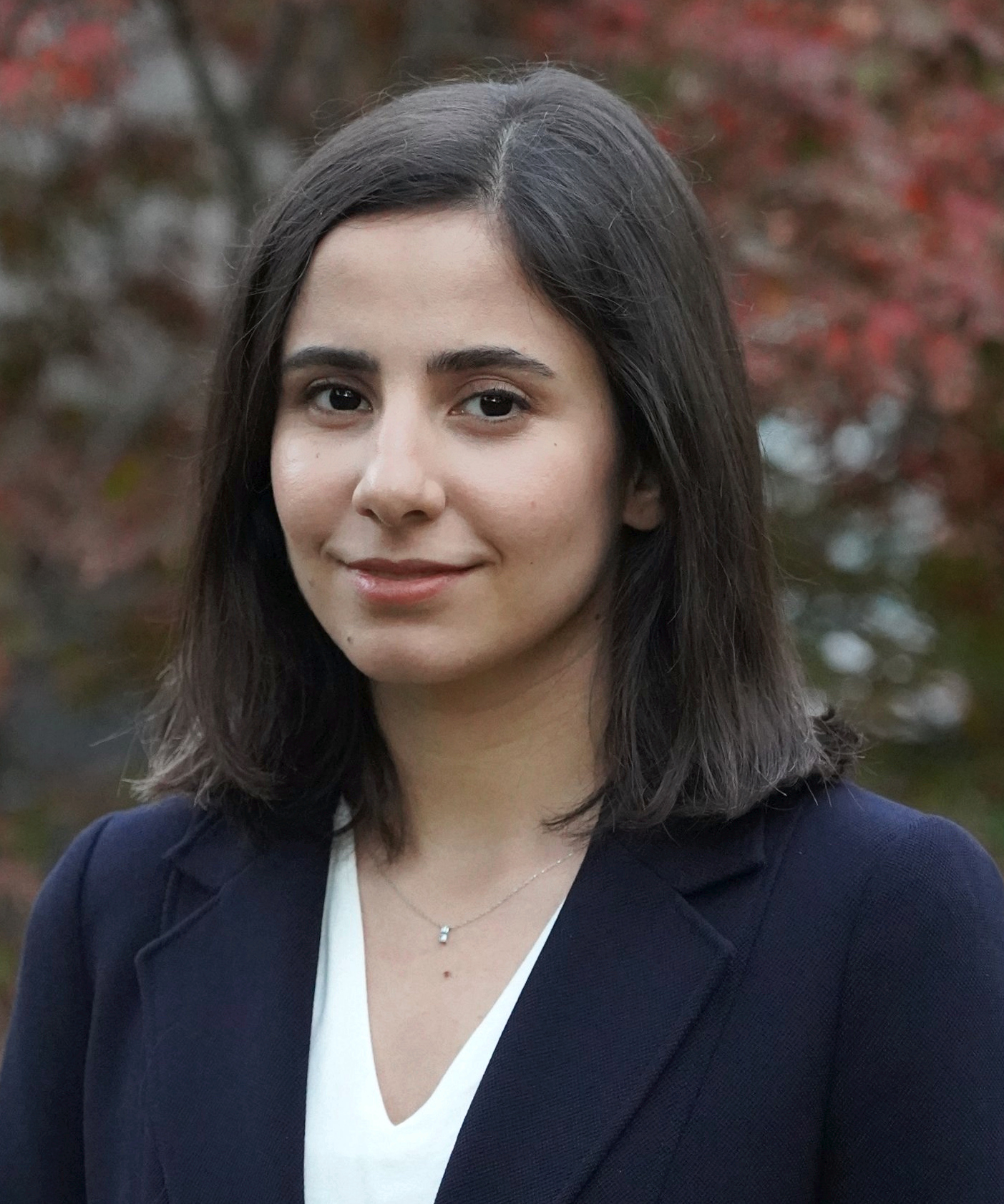
Negar Mohammadi-Jazi
Pronounced neh-GAR (rhymes with "car")
I am a PhD candidate in Economics at the London School of Economics. My research is in corporate finance and financial intermediation.
My CV is here, and you can contact me at n.mohammadi-jazi@lse.ac.uk.
I am on the 2026-2027 job market.
Fields: Corporate Finance, Financial Intermediation
References
Research
Job Market Paper
Asymmetric Information and Capital Regulation in SME Lending: A Structural Model of Bank and Non-Bank Competition
[ | Draft]Banks and non-banks compete in UK unsecured SME lending, but only banks face risk-based capital requirements, and the two lender types screen borrowers differently. We study how capital regulation, lenders' screening technologies and their interaction shape this competition. Using confidential loan-level data and new hand-collected data on screening channels, we document that banks screen smaller loans online and larger loans through relationship managers, while non-banks screen all loans online. To separate screening precision from borrower selection and from the cost of capital regulation, we develop and estimate a model of lending. Our estimates show that non-banks assess risk more precisely when both lenders screen online, but banks become more precise once they switch to human screening. Capital regulation accounts for about a quarter of banks' cost of lending, and this cost depends on how precisely banks screen. In counterfactuals, if banks screened all loans online, credit would expand, but banks' default rates would rise, mainly because they would screen less precisely. Tighter capital requirements mostly push the riskiest borrowers out of credit. Where banks screen online and less precisely, they also lose some safe borrowers they misjudge as risky to non-banks.
Work in Progress
Small Firms' Access to Liquidity
The Matching Adjustment and Corporate Bond Markets
Teaching
Graduate Teaching Assistant, London School of Economics.
Microeconomics I (EC1A1), undergraduate. Winter terms 2023–2026.
Microeconomics II (EC2A3), undergraduate. Autumn 2024 and Autumn 2025.
Microeconomics I (EC1A3), undergraduate. Autumn 2022 and Autumn 2023.